

Cognitive behavioral therapy for insomnia (CBT-I) is a structured, evidence-based treatment that targets the thoughts and behaviors keeping you awake at night. Additionally, major medical organizations recognize it as the first-line treatment. The National Institutes of Health and the American College of Physicians have endorsed CBT-I based on decades of research. Importantly, it consistently outperforms sleep medication in long-term outcomes.
Key Takeaways
- CBT-I achieves meaningful improvement in 70-80% of patients, with remission rates around 40%, often improving further at six months.
- The core behavioral techniques, sleep restriction and stimulus control, are more powerful than most people expect and require real commitment to work.
- You do not need a prescription for CBT-I, but working with a trained provider produces better results than self-directed programs alone.
- CBT-I is safe for most adults, including those managing psychiatric conditions, and does not carry the dependency risks associated with sleep medications.
- Telehealth delivery of CBT-I is effective and makes the treatment far more accessible, especially for people in areas with limited specialist availability.
- Combining sleep hygiene education, cognitive restructuring, and behavioral strategies is more powerful than any single technique used alone.
Why Cognitive Behavioral Therapy for Insomnia Is Now the Gold Standard
For decades, the default response to chronic insomnia in the United States was a prescription. Ambien, Lunesta, and similar medications offer short-term relief. However, they come with real trade-offs: dependency risk, next-day grogginess, and limited effectiveness over time. The shift toward evidence-based approaches reflects a deeper understanding of what actually causes persistent sleeplessness.
The American Academy of Sleep Medicine recommends multicomponent CBT-I as the primary treatment for chronic insomnia disorder in adults. Moreover, the American College of Physicians goes further. They state that all adult patients should receive CBT-I as their initial treatment before sleep medication is even considered. These are not tentative endorsements. They represent a clear clinical consensus built on decades of research.
What makes cognitive behavioral therapy for insomnia superior in the long run is clear. It addresses root causes rather than symptoms. Sleep medications reduce the feeling of wakefulness temporarily. In contrast, they do not change the habits, beliefs, or thought patterns that keep insomnia going. CBT-I targets all of those directly.

The Core Components of Cognitive Behavioral Therapy for Insomnia
CBT-I is not a single technique. It is a multicomponent treatment with distinct parts. Understanding what each piece does helps you engage with it more seriously.
Sleep Restriction Therapy
This is often the most challenging component. However, it is also one of the most effective. Sleep restriction temporarily limits the time you spend in bed to match your actual sleep time, not your desired sleep time. If you are only sleeping five hours but spending eight hours in bed, your prescribed window starts at five hours.
This creates mild sleep deprivation that builds sleep drive. As a result, it becomes easier to fall asleep and stay asleep. The window gradually expands as your sleep efficiency improves.
Stimulus Control
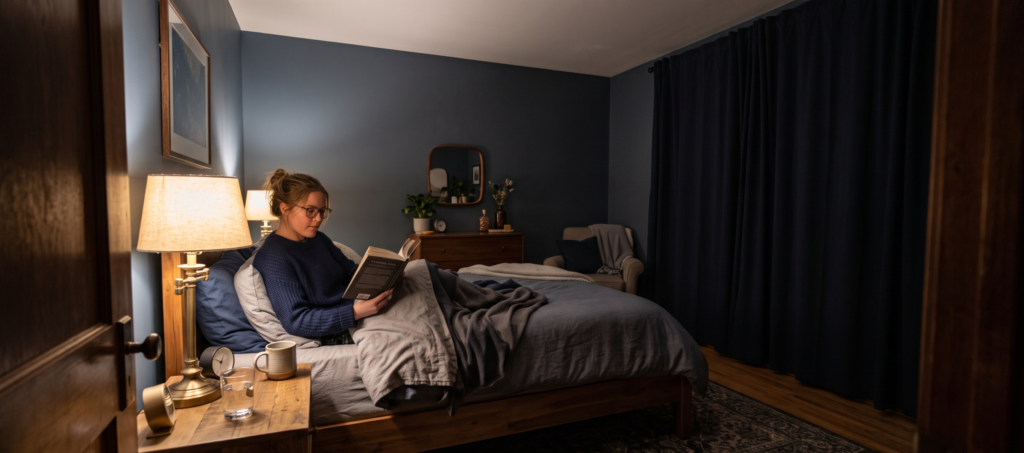
Your brain learns associations. If you regularly lie awake in bed worrying or scrolling your phone, your bed becomes associated with wakefulness rather than sleep. Stimulus control breaks that association by restricting bed use to sleep and sex only.
Furthermore, this technique requires you to get up if you cannot sleep after about 20 minutes. You establish consistent wake times regardless of how the night went. This rebuilds the connection between your bed and actual sleep.
Cognitive Restructuring
Insomnia almost always comes packaged with catastrophic thinking. “If I don’t sleep eight hours, tomorrow will be ruined.” “I never sleep well.” These thoughts are not just unpleasant. In addition, they increase arousal and make sleep harder to reach.
Cognitive restructuring teaches you to identify, challenge, and replace those thoughts with more accurate, less activating beliefs about sleep. This shift in perspective directly reduces sleep anxiety.
Sleep Hygiene Education
This covers the environmental and lifestyle factors that affect sleep quality. Light exposure, caffeine timing, alcohol, exercise, bedroom temperature, and screen use all matter. Sleep hygiene alone rarely cures insomnia. However, it forms an important foundation for the behavioral work.
Relaxation Strategies
Progressive muscle relaxation, diaphragmatic breathing, and mindfulness-based techniques reduce the physiological arousal that interferes with sleep onset. These are often taught alongside the behavioral components rather than as standalone treatments.
A 2025 analysis of 241 studies identified the most beneficial cognitive behavioral therapy for insomnia components. Cognitive restructuring, sleep restriction, stimulus control, third-wave mindfulness elements, and in-person delivery emerged as most effective. Working directly with a provider, whether in-office or via telehealth, through psychiatry and behavioral health specialists produces better outcomes than self-guided internet programs.
How Effective Is Cognitive Behavioral Therapy for Insomnia? Looking at the Numbers
The effectiveness of cognitive behavioral therapy for insomnia is well-documented. Research consistently shows meaningful results:
- 70-80% of patients show a meaningful response to treatment.
- 50% experience significant symptom reduction.
- 40% reach full remission, and this number often improves at the six-month follow-up.
Compare that to sleep medications, which show similar short-term effects. However, they decline in efficacy over time while carrying risks of dependency and side effects. CBT-I gains tend to compound: the longer you apply the skills, the better your sleep becomes.
| Outcome Measure | CBT-I | Sleep Medication |
|---|---|---|
| Short-term effectiveness | High | High |
| Long-term effectiveness | Superior | Moderate/Declining |
| Risk of dependency | None | Moderate to High |
| Effect after stopping treatment | Maintained or improving | Often returns |
| Suitable for long-term use | Yes | Limited |
This table reflects why major medical organizations have shifted their guidance so decisively toward CBT-I. It is not just effective. It is durable.
Who Should Consider Cognitive Behavioral Therapy for Insomnia
CBT-I is appropriate for most adults with chronic insomnia, typically defined as difficulty sleeping at least three nights per week for three or more months. It works across age groups and has been studied in older adults, people with chronic pain, cancer survivors, veterans with PTSD, and individuals managing anxiety and depression.
However, some people sleep poorly because of an underlying condition that needs to be addressed separately. If your sleep issues seem tied to a broader mental health concern, it is worth consulting a specialist. Understanding whether your insomnia is primary or secondary to another condition matters for treatment planning.
People managing depression, bipolar disorder, or PTSD often find that insomnia and their primary condition feed each other. In these cases, integrated treatment addresses both sleep-focused and mental health-focused concerns. As a result, outcomes tend to improve significantly.
It is also worth knowing that newer psychiatric interventions are emerging for treatment-resistant conditions. Resources exploring ketamine and spravato esketamine can help you understand where those options apply within the broader clinical landscape for comprehensive mental health support.

Practical Steps: Starting Cognitive Behavioral Therapy for Insomnia
If you want to begin working on your sleep now, here are realistic steps based on CBT-I principles:
- Track your sleep for one week. Use a basic sleep diary: what time you got into bed, when you fell asleep (estimate), how many times you woke up, when you got out of bed, and how rested you felt. Do not obsess over precision. Patterns matter more than exact minutes.
- Set a fixed wake time and stick to it. Even on weekends. Even after a bad night. This is the single most consistent variable you can control.
- Limit time in bed to your actual sleep time. Calculate your average sleep from the diary and set your bedtime window accordingly.
- Associate your bed with sleep only. No phones, no television, no work. If you lie awake more than 20 minutes, get up and do something calm in low light until you feel sleepy.
- Write down your worries before bed. Give yourself a 15-minute “worry window” earlier in the evening. As a result, anxious thoughts have an outlet before you try to sleep.
- Work with a provider when possible. A therapist trained in cognitive behavioral therapy for insomnia can adjust your program based on how you respond week to week.

Things to Know
- CBT-I typically takes 6-8 sessions to complete, though some people begin noticing improvement within two to three weeks.
- Sleep restriction feels counterintuitive and genuinely uncomfortable at first. That discomfort is part of how it works.
- CBT-I is not the same as general talk therapy or stress counseling. It is a specific, structured protocol with defined techniques.
- Insurance coverage for cognitive behavioral therapy for insomnia varies widely in the United States. Some plans cover it under behavioral health benefits, so it is worth calling your insurer before assuming the cost is out-of-pocket.
- Digital CBT-I programs (apps and online platforms) are better than nothing. However, they produce smaller effects than in-person or telehealth delivery with a trained provider.
- Older adults often respond just as well to CBT-I as younger adults, making it a valuable option across the lifespan.
Frequently Asked Questions
Q: Can I do cognitive behavioral therapy for insomnia on my own?
Yes, self-directed CBT-I is possible and can produce real improvements. However, working with a trained provider typically leads to better outcomes.
Self-guided workbooks and digital programs based on cognitive behavioral therapy for insomnia principles have been studied and do show benefit over doing nothing. The limitation is that without a provider reviewing your sleep diary and adjusting your treatment protocol, you may miss important nuances. Additionally, you might apply techniques incorrectly. If a provider is not accessible right away, starting with a reputable self-help resource is a reasonable first step.
Q: What is CBT-I treatment for insomnia?
“CBT-I” stands for cognitive behavioral therapy for insomnia, a structured, multicomponent program targeting the thoughts and behaviors that maintain chronic sleeplessness.
The “I” is simply shorthand for insomnia. The treatment typically includes sleep restriction, stimulus control, cognitive restructuring, sleep hygiene education, and relaxation training. It is not a single session or a single technique but a coordinated program usually delivered over six to eight weeks.
Q: What is the 30/30 rule for insomnia?
The 30/30 rule suggests that if you cannot fall asleep within 30 minutes of getting into bed, you should get up and do something calm for at least 30 minutes before trying again.
This rule is rooted in the stimulus control component of cognitive behavioral therapy for insomnia. Staying in bed while awake and frustrated reinforces the association between your bed and wakefulness. Getting up and returning only when you feel genuinely sleepy helps rebuild the connection between your bed and actual sleep.
Q: What is the first step in CBT-I for insomnia?
The first step is completing a sleep diary for at least one week to establish a baseline picture of your current sleep patterns.
Before any behavioral changes are introduced, a trained CBT-I provider will want to understand how much you are actually sleeping, when, and how efficiently. The sleep diary informs the initial sleep window prescription for sleep restriction therapy. Furthermore, it helps identify the specific patterns and habits driving your insomnia.
Q: What is the 10-5-3-2-1 rule for sleep?
The 10-5-3-2-1 rule is a sleep hygiene framework that sets time-based limits on behaviors that interfere with sleep in the hours before bed.
Specifically: no caffeine 10 hours before bed, no heavy meals 5 hours before, no alcohol 3 hours before, no more work or mentally demanding tasks 2 hours before, and no screens 1 hour before sleep. While not a formal CBT-I protocol, it aligns closely with sleep hygiene education principles. Therefore, it provides a practical structure many people find easy to remember and apply.
The Bottom Line on Cognitive Behavioral Therapy for Insomnia
Cognitive behavioral therapy for insomnia is one of the most well-supported, durable treatments in all of behavioral medicine. With response rates between 70 and 80%, long-term outcomes that outpace sleep medications, and no risk of dependency, it deserves serious consideration from anyone dealing with chronic sleep problems.
The techniques require genuine effort and a period of discomfort, particularly with sleep restriction. However, the results are built to last. If you are ready to take action, start with a one-week sleep diary. Additionally, set a consistent wake time and reach out to a qualified mental health or sleep provider in your area. The investment you make in your sleep health pays forward into every other area of your well-being.
Sources:
Clinical endorsements
- NIH State-of-the-Science Statement recognizing CBT-I as first-line treatment: NCBI/PMC summary
- American College of Physicians guideline (CBT-I as initial treatment before medication): Annals of Internal Medicine / ACP newsroom summary
- American Academy of Sleep Medicine guideline recommending multicomponent CBT-I as primary treatment: AASM clinical practice guideline, PMC
Effectiveness statistics